
In the fast-paced world of industrial and agricultural sourcing, a delayed shipment can ripple through your supply chain, causing production halts, missed deadlines, and frustrated customers. As an fibc jumbo bag manufacturing company that works with global clients daily, we understand that lead time is often as critical as price.
Many buyers wonder: “Why does it take 4-6 weeks (or more) to produce FIBC bags?” The answer isn’t simple because the lead time is a complex equation. Transparency is key to a successful partnership. Here, we break down the 7 key factors that influence FIBC production lead time and provide actionable advice on how you can help shorten the cycle.
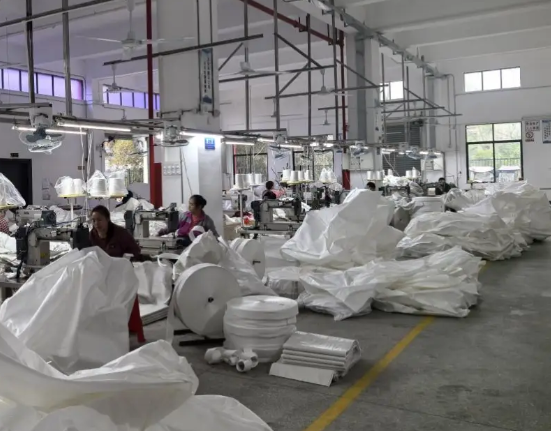
The 7 Factors That Dictate Your FIBC Shipment Date
1. Raw Material Availability (The Foundation)
- The Factor: The production of polypropylene (PP) yarn, the primary raw material, is subject to global market fluctuations, plant maintenance, and demand spikes. Unavailability of specific grades (like UV-stabilized or conductive masterbatch) can halt production before it even begins.
- Impact: This is the most common and unpredictable delay. A shortage of prime PP resin can set timelines back by weeks.
2. Production Capacity & Factory Scheduling (The Queue)
- The Factor: Reputable factories operate on a schedule. Your order joins a queue. During peak seasons (e.g., before major holidays or agricultural seasons), the production line may be fully booked. Larger orders also naturally require more time on the loom.
- Impact: A “first-come, first-served” system means your lead time depends on the factory’s current order book.
3. Customization Level (The Complexity)
- The Factor: A standard Type B bag is produced much faster than a highly customized one. Complexity adds time at every stage:
- Custom Printing: Multi-color logos require plate setup and printing runs.
- Unique Designs: Baffles, spouts, specific liners, or unusual dimensions need extra engineering and setup.
- Special Features: Manufacturing Type C or Type D anti-static bags involves controlled processes and additional testing.
- Impact: The more unique your bag, the longer the lead time. Standard is speedy; custom is critical but slower.
4. Order Quantity (The Scale)
- The Factor: While factories are optimized for large runs, a 1,000-bag order will naturally be completed faster than a 100,000-bag order. However, very small orders may be scheduled in between larger runs, which can sometimes cause minor delays.
- Impact: High volume = longer production time, but often a more efficient and stable per-unit cost.
5. Quality Control & Certification Processes (The Assurance)
- The Factor: Rigorous quality control takes time. This includes:
- In-process Checks: Monitoring weaving, coating, and sewing.
- Final Inspection: Checking a statistical sample of the finished bags.
- Third-Party Certification: If your order requires independent lab tests for safety standards (e.g., UN Certification for dangerous goods), this adds a non-negotiable buffer to the timeline.
- Impact: Skipping QC is not an option. Proper assurance protocols are a necessary time investment.
6. Logistics & Shipping Preparation (The Final Mile)
- The Factor: Once bags are produced, they need to be packed, palletized, and staged for shipping. The chosen shipping method (air vs. sea) and current port congestion, weather, and customs clearance times all play a role.
- Impact: A container stuck at a congested port can negate an excellent production lead time.
7. Documentation and Payment Flow (The Administration)
- The Factor: A delay in receiving a deposit, confirming the proforma invoice (PI), or providing required shipping instructions can pause the entire process. Complex letters of credit (LC) require meticulous document preparation and verification.
- Impact: Administrative bottlenecks are entirely preventable but can cause significant, frustrating delays.
How You Can Shorten the FIBC Lead Time: A Buyer’s Guide
As a partner in the supply chain, you have significant power to expedite the process. Here’s how:
1. Plan Ahead and Forecast
- Action: Share your rolling demand forecasts with your factory. Even an approximate estimate allows them to proactively reserve raw material capacity for you.
- Result: Your factory can “see you coming,” making you a priority and smoothing your path through scheduling.
2. Standardize Your Specifications
- Action: Where possible, use standard sizes, weights, and designs. If you need custom features, consider placing larger, less frequent orders for them rather than multiple small, custom runs.
- Result: Standard bags can often be produced from semi-finished stock or slotted into production schedules more easily.
3. Consolidate Your Orders
- Action: Instead of multiple small shipments, consolidate your needs into fewer, larger container loads (FCL).
- Result: This simplifies production planning, reduces per-unit handling costs, and makes shipping logistics far more efficient and predictable.
4. Be Decisive and Responsive
- Action: Promptly approve samples, confirm order details, and make payments as agreed. Quick decision-making is the fuel that drives the project forward.
- Result: A 24-hour delay on your end in providing information can become a 3-4 day delay in production, as your order may lose its slot in the queue.
5. Streamline Communication & Documentation
- Action: Designate a single point of contact for your company. Provide clear, complete shipping instructions and all required documentation upfront.
- Result: This eliminates back-and-forth emails and the risk of miscommunication, ensuring the administrative process is swift and smooth.
6. Discuss Logistics Early
- Action: Talk to your supplier about shipping options during the quotation phase. Understand the current lead times for sea freight to your port.
- Result: This allows for a more accurate overall timeline and helps you manage your own inventory expectations.
Conclusion: Partnership is the Key to Speed
At FIBC Bag Factory, we view every order as a partnership. While external factors exist, transparent communication and collaborative planning from both sides are the most powerful tools for ensuring on-time delivery.
By understanding these 7 factors and implementing the 6 strategies to shorten the cycle, you can transform the FIBC sourcing process from a source of stress into a model of supply chain efficiency.
Ready to streamline your next FIBC order? Contact us today for a transparent quotation and lead time estimate based on your specific needs.