
For manufacturers and procurement specialists in the food packaging industry, selecting appropriate plastic materials is both a regulatory requirement and a critical quality assurance issue. This comprehensive guide examines food-safe plastics from a technical perspective, providing the detailed information needed for informed decision-making in industrial packaging applications.

Understanding Food-Grade Plastic Compliance
Food-grade plastics must meet stringent regulatory standards that vary across markets. The FDA (U.S. Food and Drug Administration) regulates materials through Title 21 of the Code of Federal Regulations, while the European Food Safety Authority (EFSA) oversees compliance with EU Framework Regulation (EC) No. 1935/2004. These regulations address:
- Migration limits for substances that may transfer to food
- Composition requirements for plastic materials
- Testing protocols for various food contact scenarios
- Certification processes for food-contact materials
Technical Specifications of Food-Safe Plastics
The following table provides detailed characteristics of common food-grade plastics used in industrial packaging:
| Plastic Type | Resin Code | Maximum Continuous Use Temperature | Key Properties | Common Food Packaging Applications |
|---|---|---|---|---|
| PET (Polyethylene Terephthalate) | #1 | 120°C (248°F) | Excellent clarity, good gas barrier, high stiffness | Beverage bottles, food trays, jars |
| HDPE (High-Density Polyethylene) | #2 | 100°C (212°F) | High impact strength, moisture resistance, chemical inertness | Milk jugs, juice bottles, cereal box liners |
| LDPE (Low-Density Polyethylene) | #4 | 80°C (176°F) | Flexibility, clarity, heat sealability | Bread bags, squeeze bottles, packaging films |
| PP (Polypropylene) | #5 | 135°C (275°F) | Excellent chemical resistance, high melting point, durability | Yogurt containers, syrup bottles, FIBC bulk bags |
| PC (Polycarbonate) – BPA-free | #7 | 125°C (257°F) | High impact resistance, transparency, dimensional stability | Reusable water bottles, food storage containers |
Migration Testing and Compliance Standards
Understanding migration testing is crucial for packaging professionals. The following table outlines key migration testing parameters:
| Test Type | Purpose | Standard Methods | Compliance Threshold |
|---|---|---|---|
| Overall Migration | Measures total non-volatile substances migrating to food simulants | EN 1186, ASTM D7109 | ≤10 mg/dm² (EU) |
| Specific Migration | Measures individual restricted substances | EN 13130 series | Substance-specific limits |
| Threshold of Regulation | Determines if migration requires safety assessment | FDA 21 CFR §170.39 | ≤0.5 ppb dietary concentration |
Industrial Applications: FIBC Bulk Bags and Beyond
For food manufacturers handling bulk ingredients, flexible intermediate bulk containers (FIBCs) require special consideration. Food-grade FIBCs typically use polypropylene fabric with food-compliant additives and often incorporate multilayer structures:
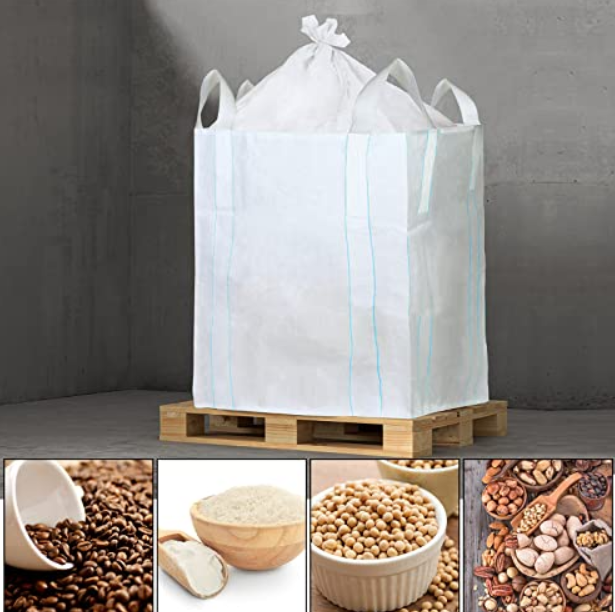
Typical Food-Grade FIBC Construction:
- Inner layer: Food-grade polyethylene or polypropylene liner
- Middle layer: PP woven fabric with food-safe UV stabilizers
- Outer protection: Food-grade coatings when required
Critical Compliance Factors:
- Antioxidants and stabilizers must be FDA/EFSA compliant
- Printing inks must meet migration requirements
- Antimicrobial treatments require specific food-contact approvals
- Recycled content limitations (typically ≤50% for food contact)
Emerging Trends and Sustainable Alternatives
The food packaging industry is evolving toward more sustainable solutions while maintaining safety standards:
Bio-based Plastics:
- PLA (Polylactic acid): Compostable but limited barrier properties
- PHA (Polyhydroxyalkanoates): Marine-degradable, suitable for specific applications
Recycled Content:
- FDA’s “No Objection Letter” process for recycled plastics in food contact
- EFSA’s evaluation process for mechanical recycling processes
- Challenges in maintaining consistent quality with recycled content
Active and Intelligent Packaging:
- Oxygen scavengers and moisture controllers in food-safe formats
- Time-temperature indicators compatible with food regulations
Best Practices for Procurement Specialists
- Documentation Requirements:
- Request compliance certificates for each material component
- Obtain letters of guarantee from suppliers
- Maintain audit trails for regulatory compliance
- Supplier Qualification:
- Verify third-party certifications (ISO 22000, BRCGS Packaging)
- Audit manufacturing processes for contamination control
- Review testing protocols and quality assurance measures
- Application-Specific Considerations:
- Fatty foods require different migration testing than aqueous foods
- High-temperature applications need specialized material selection
- Long-term storage necessitates more rigorous testing protocols
Regulatory Update: Key Changes to Monitor
- EU’s Framework Regulation revisions regarding recycled content requirements
- FDA’s ongoing updates to the Food Contact Substance Notification program
- Emerging regulations addressing intentionally added microplastics
- Global harmonization efforts through the International Life Sciences Institute
Conclusion
Selecting food-grade plastics for industrial packaging requires careful consideration of technical specifications, regulatory compliance, and application-specific requirements. By understanding the material properties, testing requirements, and regulatory framework, packaging professionals can make informed decisions that ensure food safety while meeting operational needs.
The industry continues to evolve with new materials and technologies, making ongoing education and supplier collaboration essential components of effective food packaging management.