
Summary: This comprehensive guide provides project managers with a step-by-step formula, real-world examples, and practical considerations to accurately determine the number of FIBC bulk bags needed for any project. Avoid costly mistakes and optimize your procurement strategy.
Why Accurate Bulk Bag Calculation Matters
For project managers and procurement specialists in construction, agriculture, chemical processing, and other industries, determining the correct quantity of bulk bags (also known as FIBCs or tonne bags) is crucial for project success. Under-ordering can cause expensive delays, while over-ordering wastes budget and creates storage challenges.
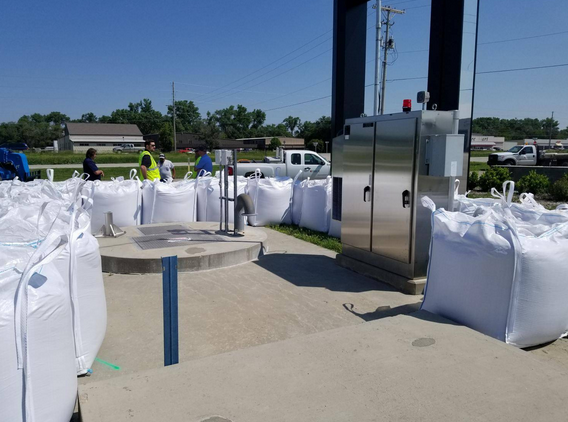
This guide goes beyond simple volume calculations to address the real-world factors that impact your FIBC requirements. By following our professional framework, you’ll make data-driven decisions that optimize both cost and operational efficiency.
Key Factors in Bulk Bag Calculation
- Material density – The weight per cubic unit of your material
- Safe Working Load (SWL) – The maximum weight capacity of your chosen FIBC
- Total project volume/weight – The complete amount of material to be handled
- Handling considerations – Spillage, compaction, and operational factors
The Professional Calculation Method
Most people mistakenly focus only on volume when calculating bulk bag needs. However, the weight capacity is almost always the limiting factor. Follow this step-by-step approach used by industry professionals:
Step 1: Determine Your Total Material Weight
First, identify the total weight of material you need to handle. If you only know the volume, you’ll need to convert it using material density:
Formula: Total Weight = Total Volume × Material Density
Step 2: Select the Appropriate Bulk Bag
Choose a bulk bag with the right Safe Working Load (SWL) for your material. Common SWL ratings are 1,000 kg (1 ton), 1,500 kg (1.5 tons), and 2,000 kg (2 tons).
Step 3: Apply the Core Calculation Formula
Primary Formula: Number of Bags Needed = Total Material Weight ÷ SWL per Bag
Practical Calculation Example
Let’s walk through a real-world scenario:
Project: Transporting 60 cubic meters of dry sand
Material density: Approximately 1,600 kg/m³
Chosen bulk bag: SWL of 1,500 kg, volume capacity of 1 m³
Calculation:
- Total Weight = 60 m³ × 1,600 kg/m³ = 96,000 kg
- Bags Needed = 96,000 kg ÷ 1,500 kg/bag = 64 bags
- Add contingency (5%) = 64 × 1.05 = 67.2 → 68 bags
Interactive Bulk Bag Calculator
Use this simple calculator to quickly estimate your needs. For complex projects, contact our experts for a detailed analysis.
| Parameter | Value | Unit |
|---|---|---|
| Total Material Weight | ||
| Bulk Bag SWL | kg | |
| Contingency Buffer | – | |
| Bags Needed | Enter values above | |
Critical Factors Affecting Your FIBC Requirements
Beyond the basic calculation, several practical considerations can impact your actual bulk bag needs:
1. Material Characteristics
Different materials behave uniquely in bulk bags:
- Fine powders may compact during transport, effectively increasing density
- Granular materials can settle, requiring less space but maintaining weight
- Low-density materials like plastic flakes may fill the bag’s volume before reaching weight limits
2. Handling and Operational Factors
Consider your specific handling conditions:
- Loading method – Some methods are more prone to spillage
- Transportation distance – Longer hauls may require stronger, potentially smaller-capacity bags
- Storage conditions – Outdoor storage might necessitate different bag specifications
3. Project-Specific Considerations
- Phased projects may benefit from staggered deliveries
- Multi-use applications might allow for bag reuse (with proper inspection)
- Regulatory requirements for certain materials may dictate specific bag types
Frequently Asked Questions
What is the standard size of a bulk bag?
While there’s no universal standard, the most common volume capacity is approximately 1 cubic meter (about 35 cubic feet). However, FIBCs come in various dimensions tailored to specific applications and material densities.
Can I reuse FIBC bags for multiple projects?
This depends on the bag type and condition. Single-trip bags are designed for one-time use, while reusable FIBCs can withstand multiple cycles when properly inspected between uses. Always consult the manufacturer’s guidelines and inspect bags for damage before reuse.
How does material density affect my calculation?
Density determines whether your limiting factor is volume or weight. High-density materials (metals, minerals) will reach weight limits first, while low-density materials (plastics, wood chips) will fill available volume first. Always calculate based on the more restrictive factor.
What’s the difference between SWL and SF?
Safe Working Load (SWL) is the maximum recommended weight a bag should carry. Safety Factor (SF) is the ratio between the breaking strength and the SWL. Industry standards typically require a minimum 5:1 safety factor for FIBCs used in general applications.
How much extra should I order for contingency?
We recommend a contingency buffer of 3-10% depending on your project’s specifics. For standard materials with minimal handling loss, 3-5% is sufficient. For fine powders or materials prone to spillage, consider 5-10% extra.
Where can I find density information for my material?
Material density data can be found in technical datasheets, material safety data sheets (MSDS), or industry reference guides. If unavailable, you can calculate it by weighing a known volume of your material. Our technical team can also assist with density estimations for common materials.
Professional Guidance for Complex Projects
While this guide provides a solid foundation for calculating your bulk bag needs, complex projects with unique materials or handling requirements may benefit from professional assessment.
Get a Customized FIBC Solution
As a leading FIBC bag manufacturer with 20 years of industry experience, we offer complimentary project analysis to ensure you get the right bags in the right quantities.
- Material-specific recommendations
- Handling and storage optimization advice
- Volume pricing for large projects
- Technical support throughout your project
Contact our FIBC experts today for a free, no-obligation project assessment:
Email: [email protected] | WhatsApp: +86 159-858-17329
Accurate bulk bag calculation is essential for project efficiency and budget management. By applying the professional methodology outlined in this guide—focusing on weight capacity, accounting for material characteristics, and including appropriate contingencies—you can confidently determine your FIBC requirements for any project size or complexity.