
📚 Table of Contents
If you’re searching for “how to calculate weight of FIBC bag,” you’ve come to the right place. This comprehensive guide provides everything you need to accurately determine FIBC bag weights for shipping, logistics, and safety compliance. Plus, we’ve included an interactive calculator to make your calculations instant and error-free.
What is an FIBC Bag?
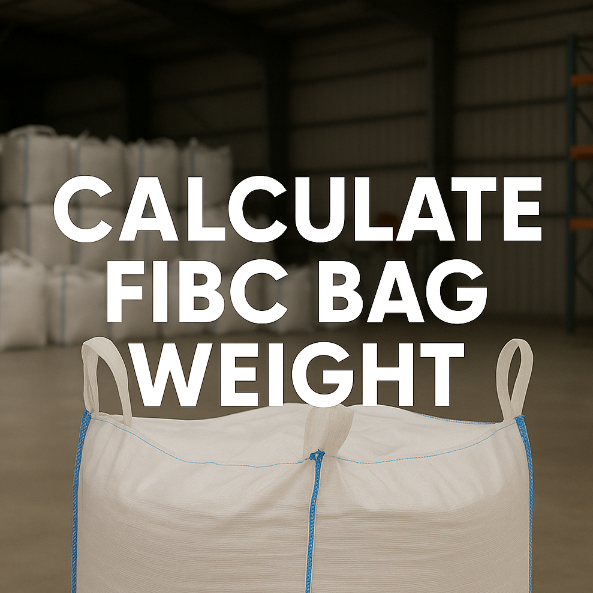
FIBC (Flexible Intermediate Bulk Container) bags, also known as bulk bags or jumbo bags, are industrial containers designed for storing and transporting dry, flowable products such as grains, fertilizers, chemicals, and construction materials. These versatile containers typically hold between 500kg to 2000kg of material.
Why Accurate FIBC Weight Calculation Matters
🚚 Shipping & Logistics
Accurate weight calculations prevent costly surprises in freight charges and ensure compliance with carrier weight restrictions.
⚖️ Safety Compliance
Preventing overloading reduces the risk of bag failure and accidents during handling and transportation.
💰 Cost Control
Precise inventory management and material tracking help optimize operations and reduce waste.
The Fundamental FIBC Weight Formula
Total Gross Weight = Tare Weight + Net Weight
Total Gross Weight
The complete weight of the filled FIBC bag, including both the container and its contents.
Tare Weight
The weight of the empty FIBC bag itself (typically 2.5-4.5 kg / 5.5-10 lbs).
Net Weight
The weight of the product/material inside the bag (the actual payload).
Step-by-Step Calculation Guide
Find the Tare Weight
Locate the manufacturer’s label on your FIBC bag. The tare weight is typically printed there. If unavailable, check the product specification sheet or contact your fibc big bag manufacturer and supplier. As a reference, standard FIBC bags usually have a tare weight between 2.5-4.5 kg (5.5-10 lbs).
Determine the Net Weight
This is the weight capacity of your bag. Common capacities include 1000 kg, 1500 kg, or 2000 kg. Remember to consider both the bag’s volume capacity and its Safe Working Load (SWL) rating, especially for dense materials that might reach weight limits before volume limits.
Apply the Formula
Add the tare weight and net weight together to get the total gross weight. For example: 4 kg (tare) + 1000 kg (net) = 1004 kg total gross weight.
Key Factors Affecting FIBC Weight Calculations
📊 Fabric Weight (GSM)
The weight of polypropylene fabric, measured in Grams per Square Meter (GSM), directly impacts tare weight. Heavy-duty bags (190-220 GSM) weigh more than standard bags (140-160 GSM).
⚖️ Product Density
High-density materials (sand, metal powders) may reach weight capacity before filling the bag volume, while low-density materials (plastic pellets, grains) may fill volume before reaching weight limits.
🛡️ Safety Factor (SF)
While not directly affecting weight calculation, the Safety Factor (typically 5:1 or 6:1) determines the maximum safe working load. Never exceed the SWL rating of your FIBC bag.
FIBC Weight Calculator
Use our interactive calculator below to instantly determine your FIBC bag’s total weight. Simply enter the required values.
FIBC Weight Quick Reference Chart
| FIBC Capacity (Net Weight) | Average Tare Weight | Total Gross Weight (Approx.) |
|---|---|---|
| 1,000 lbs (450 kg) | 5.0 lbs (2.3 kg) | 1,005.0 lbs (452.3 kg) |
| 1,500 lbs (680 kg) | 5.5 lbs (2.5 kg) | 1,505.5 lbs (682.5 kg) |
| 2,000 lbs (907 kg) | 6.0 lbs (2.7 kg) | 2,006.0 lbs (909.7 kg) |
| 2,500 lbs (1,134 kg) | 6.5 lbs (3.0 kg) | 2,506.5 lbs (1,137.0 kg) |
| 3,000 lbs (1,360 kg) | 7.0 lbs (3.2 kg) | 3,007.0 lbs (1,363.2 kg) |
Frequently Asked Questions
What’s the difference between Tare Weight and Net Weight?
Tare Weight refers to the weight of the empty FIBC bag itself, while Net Weight is the weight of the product contained within the bag. Gross Weight is the sum of both.
Where can I find the Tare Weight of my FIBC bag?
The tare weight is typically printed on the manufacturer’s label, usually located near the lifting loops. If it’s not visible, check the product specification sheet or contact your FIBC supplier directly.
Should I include the pallet weight in my calculation?
For complete shipping weight calculations, yes. When an FIBC bag is placed on a pallet, the formula becomes: Total Shipment Weight = FIBC Gross Weight + Pallet Tare Weight.
Why might my calculated weight differ from actual scale weight?
Small discrepancies can occur due to moisture content in the product, residual material from previous loads, manufacturing variations in the bag, or scale calibration differences.
Master Your FIBC Weight Calculations
Accurate FIBC weight calculations are essential for efficient logistics, cost control, and most importantly, workplace safety. By using the formula Gross Weight = Tare Weight + Net Weight and considering factors like product density and Safe Working Load, you can optimize your operations and prevent costly errors.
Pro Tip: Always verify the manufacturer’s specifications on your FIBC bag and when in doubt, physically weigh a sample empty bag to confirm its exact tare weight.
Disclaimer: The values and calculations provided in this article are for educational and reference purposes. Always refer to the specific manufacturer’s data for your FIBC bags for critical calculations, especially those related to safety and lifting operations.