
If you work with bulk powders, granules, or agricultural products, you’ve likely heard the terms “Q Bag“ or “Baffle Bag.” And if you’ve ever wondered what sets them apart from a standard bulk bag, you’re asking the right question. This isn’t just industry jargon; it’s a fundamental design innovation that directly impacts your bottom line.
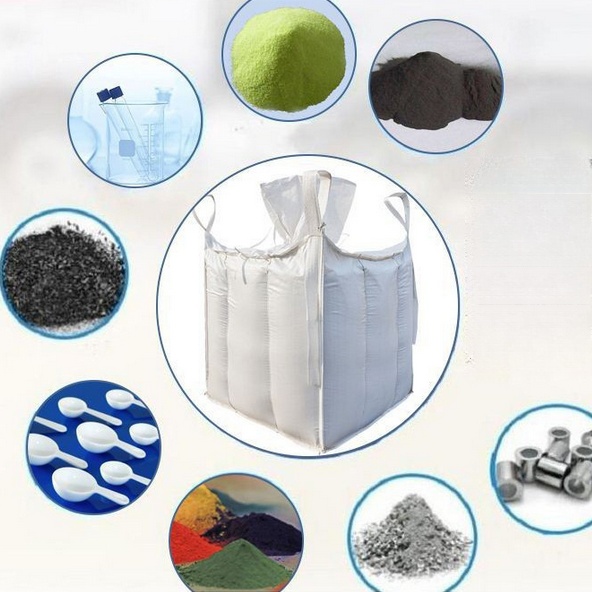
In essence, a Q Bag is a type of Flexible Intermediate Bulk Container (FIBC) designed with internal baffles to maintain a rigid, cubic shape when filled. Let’s peel back the layers and understand why this simple concept is a game-changer for logistics and storage worldwide.
1. What is a Q Bag? More Than Just a Name
The “Q” in Q Bag often stands for “Quality” or “Cubic,” reflecting its superior, consistent shape. However, its most common technical name is the Baffle Bag or Cubic Bag.
Think of it this way: a standard FIBC is like a soft-sided lunch bag—it conforms to the shape of its contents. A Q Bag, on the other hand, is like a rigid lunch box—it forces its contents into a predefined, efficient shape.
The Core Differentiator: Internal Baffles
The magic lies in the internal structure. A Q Bag is constructed with vertical fabric panels—the baffles—sewn between the front and back walls of the bag. These baffles, often made of sturdy mesh or woven fabric, act as an internal skeleton, creating multiple connected chambers that resist outward pressure.
2. The “Aha!” Moment: Q Bag vs. Standard FIBC
To truly grasp the value, let’s compare it to the traditional alternatives.
| Feature | Standard U-Panel / Circular Bag | Four-Panel Bag (No Baffles) | Q Bag / Baffle Bag |
|---|---|---|---|
| Filled Shape | Bulges into a cylindrical “pillow” shape | Better, but still has rounded edges | Maintains a true, stable cube |
| Stackability | Poor; rounded bottom creates instability | Good, but stacks can lean | Excellent; flat, vertical walls create secure, high stacks |
| Space Utilization | Low; significant gaps when stacked | Moderate | Maximum; allows for tight, gap-free packing |
| Ideal For | Single-use, non-stacked applications | General purpose, moderate stacking | High-value goods, multi-story stacking, export shipping |
The visual difference is stark. While a standard bag bulges outwards, a properly filled Q Bag stands as a perfect, space-efficient rectangle.
3. Why Your Business Needs a Q Bag: The Tangible Benefits
Choosing a Q Bag isn’t just about buying a container; it’s about investing in a more efficient operation.
- Maximized Logistics Efficiency: This is the single biggest benefit. Their consistent cubic shape allows them to be packed tightly together in shipping containers and on trucks. You can fit more units in the same space, dramatically reducing your per-unit shipping costs. There are no wasted gaps.
- Unmatched Storage Safety & Density: The flat walls and even weight distribution of Q Bags allow for safe, stable stacking. You can stack them higher in your warehouse without fear of toppling, which increases your storage capacity vertically and enhances workplace safety.
- Protection of Contents: The rigid structure minimizes product shift and movement during transit. This is crucial for protecting fragile materials or ensuring a consistent product presentation upon arrival.
- Built for the Long Haul: Q Bags are inherently robust due to their multi-panel and baffled construction. When combined with high-quality PP fabric and a standard 5:1 safety factor, they are designed for multiple trips, offering a lower total cost of ownership.
4. Key Specifications & What to Look For
When sourcing Q Bags, here are the critical specifications to discuss with your FIBC manufacturer:
- Baffle Construction: Typically 2 or 4 internal baffles. More baffles generally mean a more rigid cube.
- Safety Factor (SF): Always look for a minimum 5:1 safety ratio. This means a bag rated for 1,000 kg is tested to hold 5,000 kg.
- Lifting Loops: Ensure they are robust, correctly positioned, and sized for your handling equipment.
- Discharge Options: Common features include a duffle top for easy filling and a bottom spout with a tie (e.g., star closure) for controlled discharge.
- Certifications: Ensure the manufacturer follows international standards (like ISO 21898) for quality and safety.
5. Frequently Asked Questions (FAQ)
Q1: What does “Baffle Bag meaning” actually refer to?
A: It refers directly to the internal baffles—the vertical fabric panels inside the bag that are responsible for creating its stable, cubic shape. The name describes the core component of its design.
Q2: Is a Q Bag the same as a 4-Panel Bag?
A: Not exactly. A 4-panel bag is made from four sheets of fabric, which gives it a more rectangular profile than a U-panel bag. However, a true Q Bag or Baffle Bag adds internal baffles to a 4-panel construction to actively prevent bulging. All Q Bags are 4-panel bags, but not all 4-panel bags are Q Bags.
Q3: What materials are Q Bags used for?
A: They are ideal for a vast range of dry, free-flowing materials, including:
- Agricultural: Beans, grains, rice, corn, seeds, animal feed.
- Industrial: Plastic pellets, polymers, chemicals, minerals.
- Food & Pharma: Sugar, salt, flour, food ingredients (with appropriate liners).
Q4: Are Q Bags more expensive?
A: Initially, yes, the unit cost is typically higher than a standard FIBC due to the more complex construction. However, the Total Cost of Ownership (TCO) is often lower. The savings from reduced shipping costs, improved storage density, and reusability quickly outweigh the initial price difference.
Conclusion: The Smart Choice for Modern Bulk Handling
The Q Bag is a brilliant example of form meeting function in industrial packaging. It’s a direct response to the universal challenges of shipping costs and storage safety. By understanding its design, benefits, and applications, you can make an informed decision that streamlines your supply chain, protects your product, and saves you money.
Ready to experience the Q Bag difference? As a leading FIBC bag Manufacturer, we specialize in manufacturing high-performance baffle bags tailored to your specific needs. Contact us today for a quote and let us help you optimize your bulk handling operations.