
Table of Contents
As global industries push toward sustainable supply chains, the concept of FIBC bulk bag refurbishment has evolved from an environmental consideration into a core operational strategy. But what exactly is the FIBC bulk bag refurbishment process, and how does it work in practice?
In short, FIBC bulk bag refurbishment is the systematic process of cleaning, inspecting, repairing, testing, and recertifying used Flexible Intermediate Bulk Containers (FIBCs) so they can be safely reused for another cycle of transport and storage. This process—also referred to as bulk bag reconditioning, reclaiming, or closed-loop refurbishment—extends the useful life of polypropylene bulk bags while ensuring they meet rigorous safety and performance standards.
1. Core Definition: What Is FIBC Bulk Bag Refurbishment?
FIBC bulk bag refurbishment is a professional, documented workflow designed to take a used bulk bag and restore it to a condition that is safe for reuse—typically within a closed-loop system, where the bag is returned from the end-user, cleaned and repaired, and then sent back to handle the same product and application for which it was originally designed.
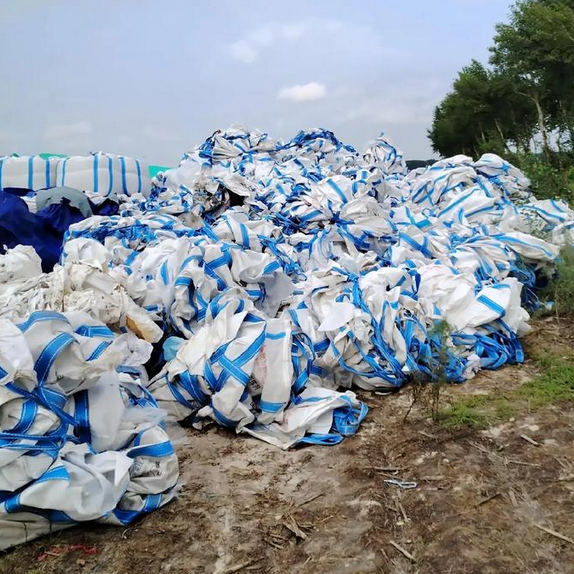
The process is governed by the Flexible Intermediate Bulk Container Association (FIBCA) guidelines, as well as international standards including ISO 21898 (for non-dangerous goods) and UN certification requirements (for hazardous materials). The leading principle is simple: only FIBCs designed for multiple uses—those with a safety factor of 6:1 or higher—should be considered for refurbishment. Single-use bags with a 5:1 safety factor are not suitable for refurbishment and should instead be responsibly recycled or repurposed for non-commercial applications.
2. Why Refurbish FIBC Bulk Bags?
2.1 Cost Savings
Refurbished FIBCs offer significant cost advantages. Used bulk bags typically cost 30–50% of new bag prices, with prices ranging from $3 to $10 per bag compared to $8–25 for new bags. When reuse programs are implemented at scale, raw material costs can be reduced by up to 40% compared to virgin production.
2.2 Environmental Benefits
Refurbishment directly supports circular economy principles. Every refurbished bag means less demand for virgin polypropylene production, reduced carbon footprint, and less plastic waste ending up in landfills.
2.3 Operational Advantages
Refurbished FIBCs reduce dependency on manufacturing lead times, lower exposure to volatile raw material prices, and can be made available more quickly than new production.
2.4 Regulatory Drivers
The EU Packaging and Packaging Waste Regulation (PPWR) introduces new reuse obligations from 2030 for certain packaging types. Many companies are proactively adopting FIBC refurbishment programs to stay ahead of evolving sustainability compliance requirements.
3. Step-by-Step FIBC Bulk Bag Refurbishment Process
Step 1: Tracking and Logging
Before any refurbishment work begins, each bag is assigned a unique ID. The record includes production batch number, Safe Working Load (SWL) and safety factor, product history, and number of usage cycles.
Step 2: Inspection on Return
Every returned bag undergoes a thorough visual inspection to check for cuts, abrasions, broken stitches, damaged lifting loops, signs of chemical attack, contamination, mold, or mildew. Any bag with structural damage is immediately rejected.
Step 3: Cleaning and Decontamination
Bags are thoroughly cleaned to remove all foreign matter. Common methods include dry cleaning (vacuuming/brushing) for non-hazardous dry goods, pressure washing for stubborn residue, and manual cleaning with suitable agents. For food-grade applications, validated food-grade cleaning protocols are required.
Step 4: Reconditioning and Repair
Once cleaned, the bag undergoes reconditioning — replacing web ties, cord locks, labels, repairing minor seam or loop damage, and patching small tears where structural integrity is not compromised.
Step 5: Testing and Recertification
The key testing protocol is the top lift test according to ISO 21898. Randomly selected bags are tested; for multi-trip reusable bags, the bag must withstand six times its safe working load without failure (6:1 safety factor).
Step 6: Relabeling and Return to Service
After passing inspection and testing, the refurbished bag is relabeled with updated information including weight capacity, handling instructions, reuse cycle count, and returned to the supply chain.
4. Industry Standards and Compliance
| Standard | Application | Key Requirements |
|---|---|---|
| ISO 21898 | Non-dangerous goods (food, agriculture, construction) | Safety factor 5:1 minimum; design certification; batch testing |
| UN Certification | Hazardous and flammable materials | Safety factor 6:1 minimum; annual recertification; top lift, stack, drop, vibration tests |
| FIBCA Guidelines | Industry best practices for reuse | Cleaning, reconditioning, tracking, random top lift testing |
Only FIBCs designed for multiple use according to the latest version of ISO 21898 should be considered for refurbishment. A bag marked SF 6:1 indicates it is certified for multiple uses, while SF 5:1 bags are designed for single use only.
5. Types of FIBC Bags Suitable for Refurbishment
| Bag Type | Safety Factor | Refurbishment Suitability |
|---|---|---|
| Single-Trip (5:1) | 5:1 | Not suitable; recycle or repurpose |
| Multi-Trip (6:1+) | 6:1 or higher | Suitable; can be reused 3–5+ cycles |
| UN-Certified | 6:1 minimum | Suitable but requires annual recertification |
6. Global Market Trends and Future Outlook
The global FIBC market was valued at approximately $6.6 billion in 2025 and is projected to reach $10.4 billion by 2036, growing at a CAGR of 4.20%. A growing emphasis on recycling and reuse is accelerating this trend. By product type, Type A FIBCs lead the market with 55% share in 2025, serving construction, agriculture, and commodities sectors. The average verified refurbished FIBC supplier can deliver over 500,000 units monthly, with lead times typically ranging between 7–15 days — significantly faster than new bag production.
7. Frequently Asked Questions
Q1: Can all FIBC bulk bags be refurbished?
No. Only multi-trip FIBCs with a safety factor of 6:1 or higher and designed according to ISO 21898 should be considered. Single-use 5:1 bags are not safe to refurbish.
Q2: Is refurbishment safe?
Yes, when done according to FIBCA guidelines and ISO 21898 standards, including rigorous inspection, cleaning, reconditioning, and mandatory top lift testing.
Q3: How many times can a refurbished FIBC be reused?
Multi-trip FIBCs can typically be refurbished and used for 3–5 cycles, and in some cases up to 10 or more cycles depending on handling and construction quality.
Q4: What costs can be saved through refurbishment?
Cost savings typically range from 30–50% compared to new FIBCs, with used bulk bag prices running $3–10 versus $8–25 for new bags.
Q5: What regulations apply to refurbished FIBCs?
Key regulations include ISO 21898, UN Model Regulations (for hazardous goods), and regional frameworks such as the EU PPWR (reuse obligations from 2030).
8. Conclusion
FIBC bulk bag refurbishment is a professionally managed, standard-driven process that extends the lifecycle of industrial packaging while reducing environmental impact. From tracking and inspection to cleaning, repair, testing, and recertification, the refurbishment process ensures that each bag meets rigorous safety and performance standards. With the global FIBC market expanding rapidly and sustainability regulations tightening worldwide, refurbishment offers a practical, proven pathway for businesses to reduce packaging costs, lower carbon emissions, and build more resilient, circular supply chains.
Key Takeaways:
– Only multi-trip 6:1 safety factor FIBCs should be refurbished.
– The process follows FIBCA guidelines and ISO 21898 standards.
– Refurbishment delivers 30–50% cost savings over new bags.
– Mandatory cleaning, reconditioning, and top lift testing ensure safety.
– Proper tracking and documentation are essential for compliance.